Dental Tourism to China: Complete Cost & Savings Guide 2026
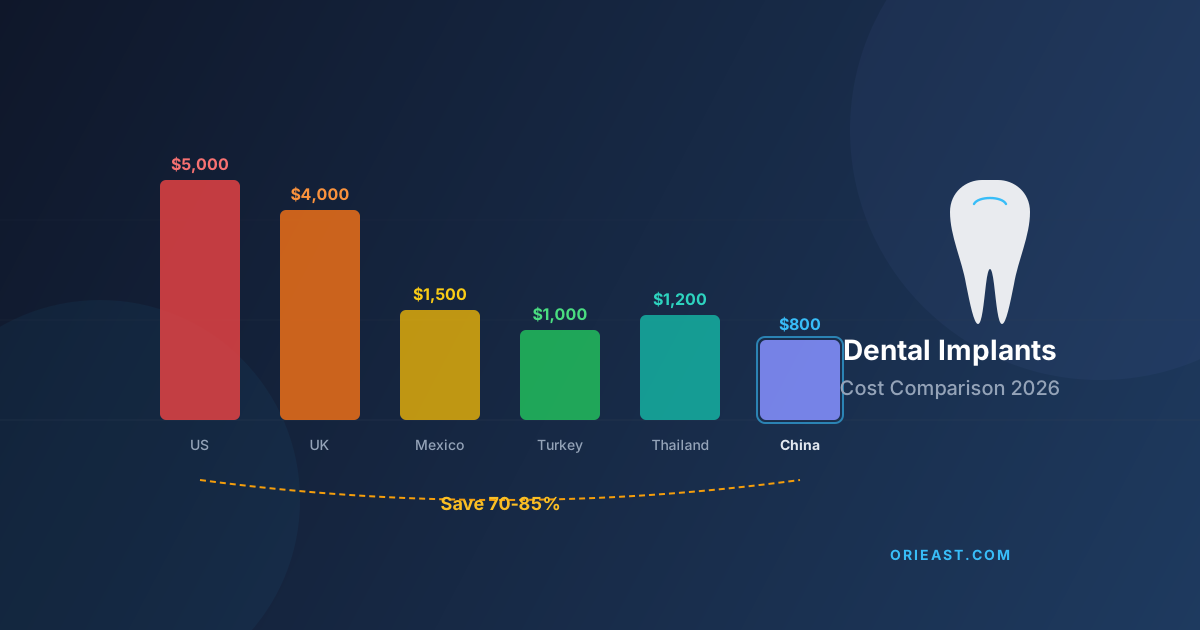
Every year, more than 10 million people travel abroad for dental care. The reason is straightforward: dental procedures in developed Western countries are expensive, often elective, and rarely covered by insurance. A single dental implant in the United States costs $3,000 to $5,000. In China, the same procedure — using the same implant brand, performed in a JCI-accredited hospital — costs $700 to $1,500.
That price difference is not a typo. It reflects fundamental differences in labor costs, facility overhead, government healthcare subsidies, and market structure — not differences in quality. China's top dental hospitals use Straumann, Nobel Biocare, and Osstem implants, operate with cone-beam CT imaging and digital treatment planning, and employ oral surgeons who trained at institutions ranked among the world's top 50 dental schools.
This guide gives you the real numbers for every major dental procedure in China, explains what drives the cost differences, identifies the hidden expenses that trip planners often miss, and helps you decide whether a dental trip to China makes financial and medical sense for your specific case.
For patients comparing China against other popular dental tourism destinations, see our China vs Mexico vs Turkey comparison. For a broader view of healthcare travel to China, read our complete medical tourism guide.
How Much Does Dental Work Cost in China?
The table below reflects 2025–2026 pricing from public and private hospitals in Shanghai, Beijing, and Guangzhou. All figures are in USD. Prices include the procedure itself, materials, and standard follow-up visits. They do not include travel, accommodation, or supplementary diagnostics unless noted.
Implants
| Procedure | China (USD) | USA (USD) | UK (GBP → USD) | Savings vs USA |
|---|---|---|---|---|
| Single implant + crown (Korean brand, e.g. Osstem) | $700–$1,000 | $3,000–$5,000 | $2,500–$4,000 | 70–80% |
| Single implant + crown (European brand, e.g. Straumann) | $1,200–$1,800 | $4,000–$6,000 | $3,000–$5,000 | 65–70% |
| All-on-4 (per arch) | $6,000–$12,000 | $20,000–$30,000 | $15,000–$25,000 | 60–70% |
| All-on-6 (per arch) | $8,000–$15,000 | $25,000–$35,000 | $20,000–$30,000 | 60–70% |
| Bone graft (per site) | $300–$800 | $1,500–$3,000 | $1,000–$2,500 | 70–80% |
| Sinus lift | $800–$1,500 | $2,000–$4,000 | $1,500–$3,500 | 60–65% |
Crowns, Veneers & Cosmetic Dentistry
| Procedure | China (USD) | USA (USD) | UK (GBP → USD) | Savings vs USA |
|---|---|---|---|---|
| Porcelain crown (zirconia) | $200–$500 | $1,000–$1,500 | $800–$1,200 | 65–80% |
| Porcelain veneer (per tooth) | $250–$600 | $1,000–$2,500 | $800–$1,500 | 70–75% |
| Full set veneers (upper 8 teeth) | $2,000–$4,800 | $8,000–$20,000 | $6,400–$12,000 | 75–80% |
| Teeth whitening (in-office) | $100–$300 | $500–$1,000 | $400–$800 | 70–80% |
General & Restorative
| Procedure | China (USD) | USA (USD) | UK (GBP → USD) | Savings vs USA |
|---|---|---|---|---|
| Root canal (molar) | $150–$400 | $1,000–$1,500 | $700–$1,200 | 70–85% |
| Extraction (wisdom tooth, surgical) | $100–$300 | $300–$800 | $250–$600 | 60–65% |
| Full denture (upper or lower) | $300–$800 | $1,000–$3,000 | $800–$2,500 | 70–75% |
| Dental bridge (3-unit, porcelain) | $400–$1,000 | $2,000–$5,000 | $1,500–$4,000 | 75–80% |
Important note on pricing: The ranges reflect the gap between public hospitals (lower end) and premium private clinics (upper end). Public hospitals in China are not lower quality — they are government-funded teaching hospitals with high case volumes and strict regulatory oversight. The price difference exists because public hospitals receive government subsidies and operate with lower profit margins.
Why Is Dental Care So Much Cheaper in China?
The cost gap is not a reflection of inferior care. It is driven by structural economic factors:
1. Government Healthcare Subsidies
China's public hospitals — where most dental tourism patients receive care — are partially funded by the government. This lowers facility costs without reducing the quality of equipment or training. Major dental departments at hospitals like Shanghai Ninth People's Hospital (ranked among the top 3 in China for oral surgery) operate with the same imaging technology and implant systems as private clinics in New York or London, but at a fraction of the overhead.
2. Lower Labor Costs with Equivalent Training
An experienced oral surgeon in Shanghai earns significantly less than a counterpart in Los Angeles, despite having completed comparable training (typically 5 years of dental school plus 3 years of specialty residency). China graduates approximately 30,000 dentists per year from accredited programs, creating a competitive labor market that keeps professional fees lower.
3. Economies of Scale
China performs more dental implant procedures per year than any other country. High case volumes allow hospitals to negotiate better prices with implant manufacturers and spread fixed costs across more patients. When a hospital places 5,000+ implants per year, the per-unit cost of Straumann fixtures drops substantially compared to a private practice placing 200.
4. Competitive Market Pressure
China has over 100,000 licensed dental clinics and departments. This competition, combined with price-conscious domestic patients, keeps margins thin and prices accessible. Medical tourism patients benefit from the same competitive pricing that serves China's domestic market of 1.4 billion people.
What Is Included — and What Is Not
Understanding what your quoted price covers is critical. Here is a typical breakdown:
Usually Included
- Initial consultation and examination
- Panoramic X-ray or CBCT scan
- The implant fixture, abutment, and crown (for implant procedures)
- Local anesthesia
- Standard follow-up visits (usually 1–2 during your stay)
- Basic medications (antibiotics, pain relief)
Usually NOT Included
- International travel (flights typically $400–$1,200 depending on origin)
- Accommodation (budget $40–$100/night in Shanghai or Beijing for a comfortable hotel near the hospital)
- Sedation or general anesthesia (if requested, add $200–$500)
- Temporary restorations (if your case requires staged treatment, a temporary crown may cost $50–$150)
- Additional diagnostics (blood tests, specialist consultations for complex cases)
- Translation services (some hospitals provide this free; private agencies charge $50–$100/day)
Total Trip Cost Example
For a patient flying from the US to Shanghai for two dental implants (Straumann) with crowns:
| Item | Cost (USD) |
|---|---|
| 2 × implants + crowns | $2,400–$3,600 |
| Round-trip flight (US → Shanghai) | $600–$1,000 |
| Hotel (7 nights) | $350–$700 |
| Local transport + meals | $200–$400 |
| Translation (if needed) | $0–$300 |
| Total trip cost | $3,550–$6,000 |
| Same procedure in the US | $8,000–$12,000 |
| Net savings | $2,000–$8,450 |
Even including flights and accommodation, most patients save 40–60% on the total cost compared to domestic treatment. For larger procedures like All-on-4 or full-mouth restorations, the savings scale dramatically — often exceeding $15,000–$25,000.
How to Evaluate Quality: What to Look For
Low cost means nothing if the quality is poor. Here is how to assess whether a Chinese dental provider meets international standards:
Hospital Accreditation
- JCI accreditation (Joint Commission International) — the global gold standard for hospital quality. Several hospitals in Shanghai and Beijing hold JCI certification.
- Grade III, Level A designation — China's highest domestic hospital rating, awarded by the National Health Commission. This is equivalent to a university teaching hospital in the US or UK.
Implant Brand Verification
Ask which implant brand and product line will be used. Reputable clinics use brands you can independently verify:
- Premium tier: Straumann (Switzerland), Nobel Biocare (Sweden/Switzerland), Dentsply Sirona (USA/Germany)
- Mid tier: Osstem (South Korea), Dentium (South Korea), MegaGen (South Korea)
- Budget tier: Chinese domestic brands — functional but with less long-term clinical data internationally
Every implant should come with a brand-authenticated warranty card and a serial number you can verify on the manufacturer's website.
Dentist Credentials
- Look for dentists who trained at top Chinese dental schools: Peking University School of Stomatology, Shanghai Jiao Tong University School of Medicine, or Sichuan University West China School of Stomatology
- International fellowship or training (e.g., ITI Fellow, ICOI member) is a positive signal
- Ask about case volume — experienced implant surgeons place 300+ implants per year
Technology and Workflow
Modern dental tourism clinics in China should offer:
- Cone-beam CT (CBCT) for 3D imaging before implant placement
- Digital treatment planning and surgical guides
- CAD/CAM for same-day crown fabrication (in some facilities)
- Intraoral scanners (replacing traditional impressions)
If a clinic cannot confirm these capabilities, look elsewhere.
Treatment Timeline: How Long Do You Need to Stay?
The length of your trip depends on the procedure:
| Procedure | Minimum Stay | Typical Stay | Notes |
|---|---|---|---|
| Veneers (6–10 teeth) | 5–7 days | 7–10 days | Prep, temporary placement, final bonding |
| Single implant (immediate loading) | 3–5 days | 5–7 days | If bone quality allows immediate crown |
| Single implant (standard protocol) | 2 trips: 3–5 days + 3–5 days | 3–6 months between trips | Implant placement → healing → crown |
| All-on-4 / All-on-6 | 5–10 days | 7–14 days | Often immediate loading with temporary teeth |
| Root canal + crown | 3–5 days | 5–7 days | May require 2–3 visits |
| Full dentures | 5–7 days | 7–10 days | Multiple fittings needed |
One-trip vs. two-trip protocols: For standard implants, many Chinese hospitals now offer immediate-loading protocols where a temporary crown is placed on the same day as the implant. This allows you to leave with functional teeth and return later (or arrange local follow-up) for the permanent crown. Ask your provider whether your bone density supports this approach.
Best Cities for Dental Tourism in China
Shanghai
- Why: Highest concentration of JCI-accredited hospitals, strongest international patient infrastructure, most English-speaking dental staff
- Top facilities: Shanghai Ninth People's Hospital (public, top-ranked), various premium private dental clinics in Jing'an and Pudong
- Best for: Patients who want the highest assurance of international-standard care and are willing to pay slightly more than other Chinese cities
Beijing
- Why: Home to Peking University School of Stomatology (China's #1 ranked dental school), strong public hospital system
- Top facilities: Peking University Hospital of Stomatology (public), premium private clinics in Chaoyang and Haidian
- Best for: Complex cases that benefit from academic medical center resources
Guangzhou
- Why: Lower costs than Shanghai or Beijing (typically 10–20% less), strong dental infrastructure, convenient for patients from Southeast Asia
- Best for: Budget-conscious patients, those combining dental work with travel to southern China or Hong Kong
Shenzhen
- Why: Closest major city to Hong Kong (30 minutes by train), competitive pricing, growing number of international-focused dental clinics
- Best for: Patients based in Hong Kong or Southeast Asia looking for quick cross-border dental trips
Step-by-Step: How to Plan a Dental Trip to China
Step 1: Get a Domestic Assessment First
Before traveling, get a panoramic X-ray and a written treatment plan from your local dentist. This serves as a baseline and allows Chinese providers to give you an accurate remote quote.
Step 2: Request Remote Consultations
Send your X-rays and treatment plan to 2–3 Chinese providers. Compare their proposed treatment plans, implant brands, timelines, and total costs. Be wary of quotes that seem dramatically lower than the ranges in this guide — they may use budget implant brands or exclude necessary procedures.
You can send your case to OriEast for a free assessment and provider matching.
Step 3: Verify Credentials and Reviews
Check hospital accreditation, dentist qualifications, and patient reviews. Look for reviews from international patients specifically — the experience of navigating language, logistics, and follow-up care matters as much as clinical skill.
Step 4: Arrange Visa and Travel
Most nationalities can enter China on a tourist visa (L visa) or take advantage of China's transit visa exemption (up to 144 hours for citizens of 54 countries). For detailed visa guidance, see our China medical visa guide.
Step 5: Arrive 1 Day Early
Give yourself a day to adjust to the time zone and settle in. Schedule your first appointment for day 2.
Step 6: Treatment and Follow-Up
Attend all scheduled appointments. Keep all receipts, warranty cards, and implant serial numbers. Ask for a complete treatment summary in English before you leave — you will need this for your local dentist's records.
Step 7: Post-Trip Follow-Up
Arrange a follow-up visit with your local dentist 4–6 weeks after returning home. Share your Chinese treatment records. For implant cases requiring a second trip, most providers will schedule this 3–6 months after initial placement.
Risks and How to Mitigate Them
Dental tourism carries real risks. Acknowledging them is more useful than pretending they do not exist.
Language Barrier
Risk: Miscommunication about treatment plans, materials, or aftercare instructions. Mitigation: Choose hospitals with dedicated international patient departments. Use a medical translator for all consultations. Get written treatment plans in English before agreeing to any procedure. OriEast provides bilingual coordination for all dental patients.
Aftercare Complications
Risk: If a complication arises after you return home, your local dentist may be unfamiliar with the work done abroad. Mitigation: Bring home complete records including X-rays, implant brand and serial numbers, and a treatment summary. Establish a relationship with a local dentist before traveling so they can provide follow-up care.
Quality Variation
Risk: Not all clinics in China meet the same standard. The gap between the best and worst providers is wide. Mitigation: Stick to Grade III Level A hospitals or JCI-accredited facilities. Verify implant brands independently. Avoid clinics that cannot provide brand authentication or warranty documentation.
Treatment Plan Inflation
Risk: Some clinics may recommend unnecessary procedures to increase revenue. Mitigation: Get a treatment plan from your local dentist first. Compare it with the Chinese provider's recommendation. If the Chinese plan includes significantly more procedures, ask for a clear clinical justification.
Frequently Asked Questions
Is dental care in China safe for foreigners?
Yes, when you choose accredited hospitals with international patient experience. China's top dental facilities operate under strict regulatory oversight from the National Health Commission, use internationally certified implant brands, and follow infection control protocols equivalent to Western standards.
Do Chinese dentists speak English?
At major hospitals in Shanghai and Beijing, many dentists speak functional English, and international patient departments provide professional medical translators. In smaller cities, English proficiency is less common — a translator is strongly recommended.
Can I combine dental work with other medical care?
Absolutely. Many patients combine dental procedures with a comprehensive health checkup, traditional Chinese medicine treatments, or specialist consultations. This is one of China's unique advantages — the ability to address multiple health needs in a single trip. See our health checkup guide for details.
How do I pay? Do Chinese hospitals accept international insurance?
Most hospitals accept cash (CNY), UnionPay, Alipay, and WeChat Pay. International credit cards (Visa, Mastercard) are accepted at major hospitals but not universally. Few Chinese hospitals bill international insurance directly — you will typically pay out of pocket and submit receipts to your insurer for reimbursement.
What if something goes wrong after I return home?
Reputable hospitals provide a warranty period for implants and restorations (typically 5–10 years for implants, 2–5 years for crowns). If a complication arises, contact the hospital's international department first. For minor issues, your local dentist can usually manage follow-up care using the records you brought home.
Is it worth traveling to China just for dental work?
For a single filling or simple extraction — probably not. For implants, veneers, full-arch restorations, or any procedure costing $3,000+ domestically, the math almost always works in your favor, even after factoring in flights and accommodation. The break-even point is typically around $2,000–$3,000 in domestic procedure costs.
Ready to Explore Dental Care in China?
If you are considering dental work abroad, the first step is simple: send us your X-rays and your local dentist's treatment plan. We will match you with accredited providers, provide a detailed cost comparison, and help you understand whether a dental trip to China makes sense for your specific situation.
For more dental tourism resources: