Millions of patients cross an international border for dental care every year. For those needing implants — the most expensive category of routine dental work — the financial incentive is overwhelming: savings of 50% to 80% compared with domestic treatment in the US, UK, Canada, or Australia.
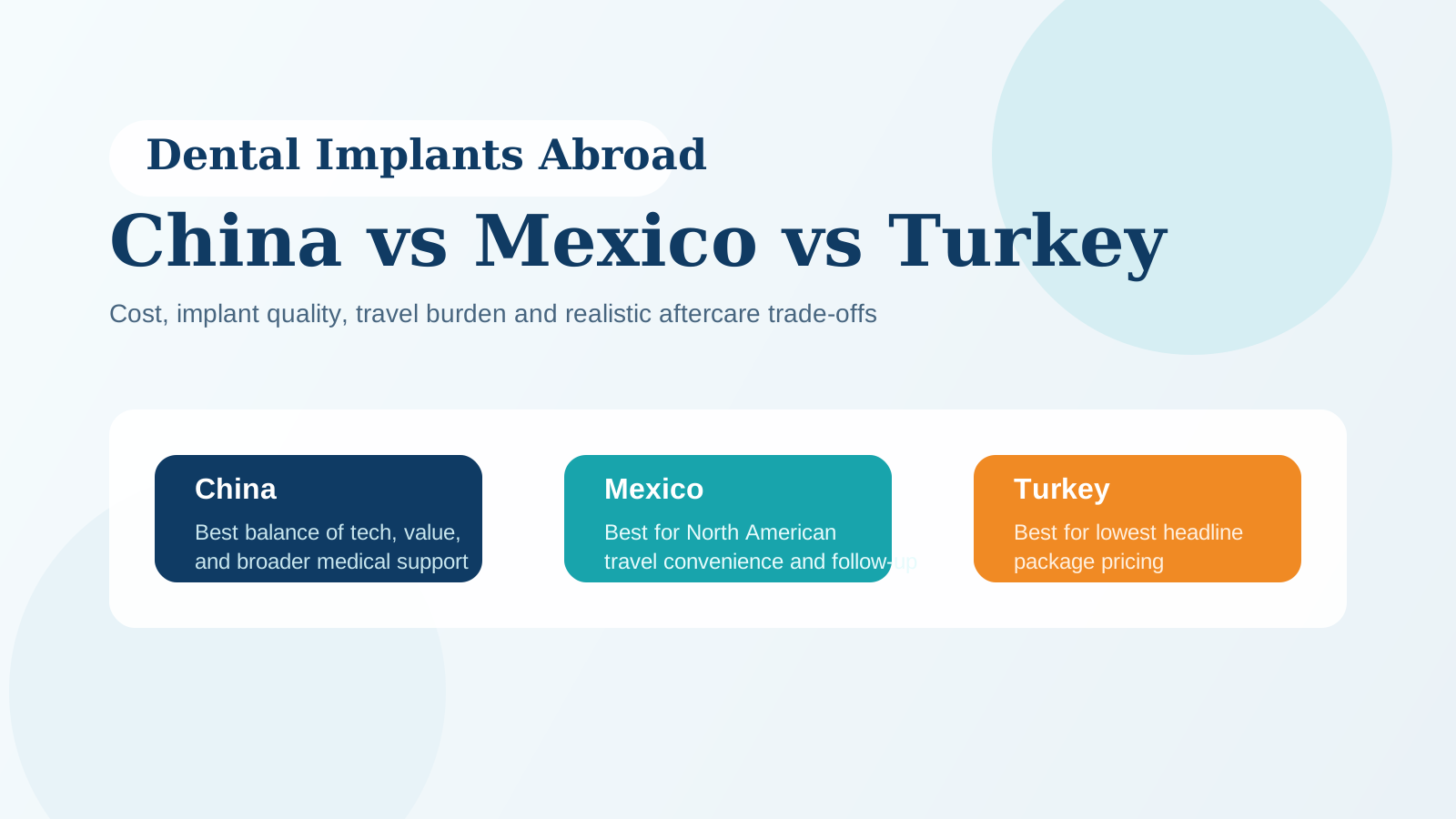
Three countries dominate the dental tourism conversation: Turkey (the volume leader, especially for European patients), Mexico (the default for North Americans), and China (the rising option for patients who want hospital-grade infrastructure at competitive prices). Each country has genuine strengths. Each also has trade-offs that marketing brochures tend to skip. The short version: Turkey tends to win on headline price, Mexico on convenience for North Americans, and China on diagnostic depth and complex-case infrastructure — but the details matter, and that is what the rest of this article unpacks.
If you want a broader market overview first, read our global dental implant cost comparison. If you are combining dentistry with a broader healthcare trip, our medical tourism in China guide covers the bigger picture.
Detailed Cost Comparison
The table below reflects 2025–2026 market pricing based on published hospital fee schedules, dental tourism agency quotes, and OriEast client data. All figures are in USD. Costs include the implant fixture, abutment, and crown unless noted. They do not include travel, accommodation, or ancillary procedures.
| Procedure | China (USD) | Mexico (USD) | Turkey (USD) | USA (reference) |
|---|---|---|---|---|
| Single implant + crown | $700–$1,500 | $900–$1,500 | $500–$1,200 | $3,000–$5,000 |
| All-on-4 (per arch) | $6,000–$12,000 | $9,500–$14,000 | $3,500–$8,000 | $20,000–$30,000 |
| All-on-6 (per arch) | $8,000–$15,000 | $12,000–$18,000 | $5,000–$10,000 | $25,000–$35,000 |
| Bone graft (per site) | $300–$800 | $400–$900 | $200–$600 | $1,500–$3,000 |
| Sinus lift | $800–$1,500 | $1,000–$2,000 | $500–$1,200 | $2,000–$4,000 |
| CBCT scan | $50–$100 | $80–$150 | $50–$100 | $250–$600 |
| Temporary prosthesis (per arch) | $400–$800 | $500–$1,000 | $300–$700 | $1,000–$2,500 |
Key takeaways from the numbers:
- Turkey has the lowest headline prices, especially for full-arch packages. However, the wide range reflects significant quality variation — the bottom of the range often means a mid-tier or unbranded implant system.
- Mexico is the most expensive of the three for complex work, but often the cheapest in total cost for US patients once travel is included (see trip cost section below).
- China occupies the middle ground on per-procedure price, but its strength is the diagnostic depth included in treatment planning — CBCT, intraoral scanning, and specialist consultation are standard at major dental hospitals, not add-on upsells.
Implant Brand Comparison
The implant brand determines long-term durability, the availability of replacement parts if you ever need a revision, and whether your home dentist can service the work. Always confirm the exact brand and model before committing.
| Brand | Origin | Tier | Typical Availability |
|---|---|---|---|
| Straumann | Switzerland | Premium | All three countries |
| Nobel Biocare | Sweden/USA | Premium | All three countries |
| Osstem | South Korea | Mid-tier (strong clinical data) | Very strong in China; available in Turkey |
| Dentium | South Korea | Mid-tier | Strong in China; some availability in Turkey |
| Zimmer Biomet | USA | Premium | Strong in Mexico; some availability in China |
| MIS Implants | Israel | Mid-tier | Common in Turkey |
| Megagen | South Korea | Mid-tier | Available in China and Turkey |
| Neodent (Straumann Group) | Brazil/Switzerland | Mid-tier | Common in Mexico |
Why this matters: In Turkey, budget-tier packages sometimes use lesser-known or white-label implant systems. In China, the most common systems at top dental hospitals are Straumann, Nobel Biocare, and Osstem — all of which have global servicing networks. In Mexico, Straumann, Nobel Biocare, and Zimmer Biomet dominate the reputable clinics.
Rule of thumb: If a clinic will not tell you the exact implant brand, model number, and lot number in writing before you pay a deposit, look elsewhere.
Top Dental Hospitals and Clinics by Country
China
China's dental infrastructure is anchored by university-affiliated hospitals — many of which rank among the top dental institutions in Asia. These are full-service medical centers, not standalone cosmetic clinics.
- Shanghai Ninth People's Hospital (Shanghai Jiao Tong University School of Medicine) — widely regarded as China's number-one dental and oral-maxillofacial hospital. Handles the most complex implant, reconstruction, and bone grafting cases in the country. Academic medical center with research-grade diagnostics.
- Shanghai Stomatological Hospital (Fudan University) — another top-tier Shanghai dental hospital with a strong implantology department and international patient services.
- West China Hospital of Stomatology (Sichuan University, Chengdu) — ranked among China's top three dental institutions. Known for advanced surgical techniques and clinical research in implantology.
- Peking University School and Hospital of Stomatology (Beijing) — Beijing's leading dental hospital, affiliated with one of China's most prestigious universities. Strong in both clinical care and implant research.
- Private international dental clinics in Shanghai and Beijing — for patients who prefer a private clinic setting with English-speaking staff, several JCI-accredited or internationally oriented practices offer Straumann and Nobel Biocare implants with Western-style service. OriEast can match patients to vetted options.
For more context on Shanghai's broader medical ecosystem, see our guide to international hospitals in Shanghai and Shanghai vs Beijing for medical tourism.
Turkey
Turkey's dental tourism industry is concentrated in two cities, with a model built around all-inclusive packages:
- Istanbul — the largest hub, with hundreds of clinics targeting international patients. Established names include DentGroup, DentIstanbul, Hospitadent, and Acıbadem dental departments. Quality varies enormously; the best clinics use Straumann or Nobel Biocare, while budget operations may use lesser-known brands.
- Antalya — a growing dental tourism destination that combines beach holidays with dental work. The "dental holiday package" model (flights + hotel + treatment) is most developed here.
Turkey's strength is its packaging infrastructure — many clinics handle airport pickup, hotel booking, and treatment scheduling as a single turnkey service. The risk is that this same infrastructure attracts volume-driven operations where speed takes priority over precision.
Mexico
Mexico's dental tourism model is built around geographic convenience for US patients:
- Los Algodones ("Molar City") — a small border town in Baja California with over 350 dental clinics serving approximately 10,000 US patients per week during peak season. Walk across the border from Yuma, Arizona. Best for straightforward implant cases and patients who want easy repeat access. Quality varies widely.
- Tijuana — a short drive from San Diego, with a range of clinics from budget to premium. Some clinics here use Straumann and Nobel Biocare and operate at standards comparable to US practices.
- Cancún — growing as a dental tourism destination, combining treatment with a vacation. Generally higher-end positioning than border-town clinics.
- Mexico City and Guadalajara — less tourist-oriented but home to well-trained specialists and lower prices than border-town or resort clinics.
Total Trip Cost Comparison
Procedure cost alone does not tell the full story. Here is what a typical dental tourism trip actually costs, including travel, for a patient getting All-on-4 on one arch:
From the United States (departing Los Angeles)
| Cost Component | China (Shanghai) | Mexico (Tijuana) | Turkey (Istanbul) |
|---|---|---|---|
| Treatment (All-on-4, one arch) | $8,000 | $11,000 | $5,500 |
| Round-trip flights | $800–$1,200 | $0–$100 (drive) | $700–$1,100 |
| Hotel (7 nights) | $500–$900 | $300–$500 | $400–$700 |
| Local transport + meals | $200–$400 | $100–$200 | $150–$300 |
| Estimated total | $9,500–$10,500 | $11,400–$11,800 | $6,750–$7,600 |
From the United Kingdom (departing London)
| Cost Component | China (Shanghai) | Mexico (Cancún) | Turkey (Istanbul) |
|---|---|---|---|
| Treatment (All-on-4, one arch) | $8,000 | $11,000 | $5,500 |
| Round-trip flights | $600–$1,000 | $600–$900 | $100–$300 |
| Hotel (7 nights) | $500–$900 | $400–$700 | $400–$700 |
| Local transport + meals | $200–$400 | $150–$300 | $150–$300 |
| Estimated total | $9,300–$10,300 | $12,150–$12,900 | $6,150–$6,800 |
From Japan or South Korea (departing Tokyo / Seoul)
| Cost Component | China (Shanghai) | Mexico (Tijuana) | Turkey (Istanbul) |
|---|---|---|---|
| Treatment (All-on-4, one arch) | $8,000 | $11,000 | $5,500 |
| Round-trip flights | $200–$500 | $1,000–$1,500 | $600–$1,000 |
| Hotel (7 nights) | $500–$900 | $300–$500 | $400–$700 |
| Local transport + meals | $200–$300 | $100–$200 | $150–$300 |
| Estimated total | $8,900–$9,700 | $12,400–$13,200 | $6,650–$7,500 |
What the trip cost tables show:
- Turkey is cheapest in total for patients from Europe and the Middle East, and often for US patients as well — if you are comparing on price alone.
- Mexico's advantage is convenience, not cost. It is actually the most expensive of the three for the treatment itself, but the near-zero travel cost from border states makes repeat visits trivial.
- China is most competitive for Asia-Pacific patients, where the flight is 2–3 hours and the total trip cost undercuts Mexico significantly. For US and UK patients, China falls in the middle — more expensive than Turkey, cheaper than Mexico, with stronger diagnostics.
Quality and Safety: A Realistic Assessment
China
Strengths:
- Treatment at major dental hospitals (Shanghai Ninth, West China, Peking University) takes place in full hospital environments with access to CBCT imaging, intraoral digital scanning, 3D-printed surgical guides, and guided implant placement as standard workflow — not premium add-ons.
- Surgeons at top institutions are typically oral-maxillofacial specialists with academic appointments, not general dentists performing implant work as a side service.
- Cases that require bone grafting, sinus lifts, or periodontal treatment before implant placement benefit from in-house specialist teams.
- Digital workflow (CAD/CAM crown fabrication, digital smile design) is standard at leading hospitals.
Considerations:
- International patient services are still developing compared with Turkey's more polished tourism infrastructure. Working with a medical travel facilitator like OriEast significantly simplifies communication, scheduling, and translation.
- The domestic dental market in China is enormous (serving 1.4 billion people), so international patients are a small fraction of volume — this means less English-language marketing but also less incentive to cut corners for tourist revenue.
Turkey
Strengths:
- The most mature dental tourism packaging system in the world. Top clinics manage the entire patient journey from airport to follow-up with professional efficiency.
- Strong competition has driven prices to the lowest levels among major dental tourism destinations.
- Many clinics use premium implant systems (Straumann, Nobel Biocare) and employ well-trained implantologists.
Considerations:
- Quality variation is the widest of the three countries. The same low barriers that make Turkey accessible also mean that volume-driven clinics can operate with aggressive patient scheduling, less experienced practitioners, or lower-tier implant brands marketed as premium.
- Some clinics prioritize speed to maximize patient throughput during short "dental holiday" stays, which can compromise treatment planning for complex cases.
- Independent verification of clinic credentials requires effort — Google reviews and social media testimonials are not reliable quality indicators.
Mexico
Strengths:
- Mature market for US patients with decades of cross-border dental care history.
- Billing and treatment structures feel familiar to Americans and Canadians.
- Easy repeat access for staged treatment or revisions from US border states.
- Some clinics operate at standards comparable to mid-to-upper-tier US practices.
Considerations:
- Quality varies sharply by clinic, especially in high-volume border towns like Los Algodones where 350+ clinics compete primarily on price.
- The convenience model works best for straightforward cases. Complex implant cases requiring bone grafting, sinus lifts, or multidisciplinary planning may benefit from a hospital-grade environment that border-town clinics typically do not offer.
- Limited access to advanced diagnostics (CBCT, digital surgical planning) at budget-tier clinics.
Aftercare and Warranty
What happens after you leave matters as much as the surgery itself. Dental implant failures, while uncommon (the global average success rate for implants from premium brands is 95–98% at 10 years), do occur — and how they are handled determines whether your investment is protected.
| Aftercare Factor | China | Mexico | Turkey |
|---|---|---|---|
| Typical warranty on implant | 5–10 years (major hospitals) | Varies widely (1–5 years typical) | 3–10 years (depends on clinic) |
| Warranty on crown/prosthesis | 1–3 years | 1–2 years | 1–3 years |
| Revision access | Moderate (requires return trip for most patients; easy for Asia-based patients) | Strong for US border-state patients | Moderate to weak (long-haul return for most patients) |
| Remote follow-up availability | Emerging — some hospitals offer telemedicine consultations | Common at established clinics | Common at tourism-focused clinics |
| Compatibility with home dentist | High if Straumann/Nobel/Osstem used (global parts availability) | High if premium brand used | Varies — verify brand serviceability at home |
| Post-treatment documentation | Detailed surgical reports at hospital-grade facilities | Varies by clinic | Varies by clinic |
Critical point: Warranty is only meaningful if (1) the clinic will still be operating when you need it, (2) you can reasonably return or arrange remote resolution, and (3) the implant brand has global parts availability so a local dentist can service it. Always get a written warranty agreement and full implant documentation (brand, model, lot number, placement torque values) before leaving.
What to Verify Before Booking
Regardless of which country you choose, run through this checklist before committing:
Accreditation and credentials
- Is the clinic or hospital accredited by a recognized body? In China, look for Grade A tertiary hospital status or JCI accreditation. In Turkey, look for JCI or Turkish Ministry of Health accreditation. In Mexico, look for ADA (American Dental Association) recognition or affiliation with a US dental school.
- What are the lead surgeon's qualifications? University-trained oral-maxillofacial surgeon vs. general dentist with implant training is a meaningful distinction for complex cases.
Implant brand and materials
- Get the exact implant brand, model, and material (titanium grade, zirconia, etc.) in writing before paying any deposit.
- Confirm the crown material: porcelain-fused-to-metal (PFM), full zirconia, or lithium disilicate. Each has different aesthetics, durability, and cost.
- If the clinic is vague about brands, that is a red flag.
Treatment plan transparency
- A reputable clinic will provide a detailed treatment plan after reviewing your CBCT scan — either taken locally and sent digitally, or taken on-site before any work begins.
- The plan should specify: number of implants, placement positions, bone grafting requirements, staging (immediate load vs. delayed), prosthetic design, and timeline.
Revision and warranty policy
- Get the warranty terms in writing, including what is covered (implant failure, crown fracture, prosthetic adjustment) and what is excluded.
- Ask what happens if a revision is needed after you return home — will the clinic cover the cost of local treatment by a partner dentist, or do you need to return?
Communication and language
- How will you communicate with your treatment team? Is there a dedicated English-speaking coordinator?
- Will discharge documents and post-operative instructions be provided in English?
Payment and cancellation terms
- What is the deposit structure? What is refundable if you cancel?
- Are there any hidden costs (consultation fees, scan fees, sedation, temporary prosthetics) not included in the quoted price?
When China Is the Strongest Choice
China is not always the cheapest option, and it is not the most convenient for everyone. But it is the strongest choice in several specific scenarios:
-
Your case is complex. If you need bone grafting, sinus lifts, extraction of failed implants, or have systemic health conditions that require medical clearance before surgery, China's hospital-based dental infrastructure provides a level of pre-treatment evaluation that standalone clinics in Turkey or Mexican border towns typically cannot match.
-
You want to combine dental work with other medical care. Many OriEast patients combine dental implants with a comprehensive health checkup in Shanghai, specialist consultations, or other procedures — turning one trip into a complete healthcare experience.
-
You are based in Asia-Pacific. From Tokyo, Seoul, Singapore, Bangkok, or Sydney, Shanghai is a 2–7 hour flight. The time zone alignment, short travel distance, and cultural proximity make China the most practical destination for patients in this region.
-
You want premium implant brands without premium-country pricing. A Straumann or Nobel Biocare implant placed at Shanghai Ninth People's Hospital costs a fraction of the same procedure in the US, UK, or Japan — with treatment delivered by some of Asia's most experienced oral surgeons.
-
You prioritize diagnostic depth over tourism packaging. If you value a thorough CBCT-based treatment plan, specialist consultation, and digital surgical workflow over a turnkey hotel-and-transfer package, China's top dental hospitals deliver that naturally — it is how they operate for all patients, not a premium upsell for medical tourists.
Frequently Asked Questions
Is it safe to get dental implants in China?
Yes — with the same caveat that applies to any country: safety depends on the specific institution and practitioner, not the country label. At China's leading dental hospitals — such as Shanghai Ninth People's Hospital, Peking University School of Stomatology, and West China Hospital of Stomatology — implant procedures are performed by university-trained oral-maxillofacial surgeons in fully equipped hospital settings. These hospitals handle tens of thousands of implant cases annually, use premium implant systems (Straumann, Nobel Biocare, Osstem), and follow evidence-based protocols. The clinical outcomes at these institutions are comparable to leading dental hospitals in the US, Germany, or Japan.
How long do I need to stay for implant surgery?
For a single implant placement, plan for 5–7 days in-country. This allows for consultation, CBCT imaging, treatment planning, surgery, and a post-operative check before departure. If your case requires extraction before implant placement, add 1–2 days. For All-on-4 or All-on-6 with immediate loading (a temporary prosthesis placed on the same day as implant surgery), plan for 7–10 days. If your treatment uses a delayed loading protocol (implants heal for 3–6 months before the final prosthesis), you will need two separate trips: one for implant placement (5–7 days) and a return visit for final prosthesis fitting (3–5 days).
Can I get All-on-4 in a single trip?
Yes, if you are a candidate for immediate loading. In this protocol, a temporary fixed prosthesis is attached to the implants on the same day as surgery or within 48–72 hours. You leave with functional teeth. A second visit (3–6 months later) is then needed to replace the temporary prosthesis with the final permanent one. Many clinics in all three countries offer this approach. Not all patients are eligible — adequate bone density and good primary stability of the implants at placement are required. Your treatment team will determine eligibility based on your CBCT scan.
What implant brands do Chinese dental hospitals use?
China's top dental hospitals use the same premium and mid-tier implant brands available globally. The most common systems include Straumann (Swiss, premium tier), Nobel Biocare (Swedish, premium tier), Osstem (South Korean, strong mid-tier with extensive clinical data), and Dentium (South Korean, mid-tier). Osstem is particularly prevalent in China and has become one of the most-implanted brands in the world by volume. All of these brands have global distribution networks, meaning your home dentist can access replacement parts and service components if needed in the future.
How do I verify a dental clinic's quality abroad?
Start with credentials: check whether the institution is a recognized university-affiliated hospital (China), JCI-accredited (any country), or recognized by a relevant national dental association. Next, ask about the lead surgeon's training, specialization, and case volume for your specific procedure. Request before-and-after photos of similar cases (not just the best outcomes). Ask which implant brand is used and verify independently that it is a reputable system. Read reviews on platforms beyond the clinic's own website. If possible, ask for references from previous international patients. Working with a medical travel facilitator like OriEast can streamline this verification process — we vet institutions and practitioners before recommending them.
What if I need a revision after returning home?
This is one of the most important questions in dental tourism, and the answer depends on three factors: what brand of implant was used, what warranty the clinic offers, and whether a local dentist can service the work. If a globally available brand (Straumann, Nobel Biocare, Osstem, Zimmer Biomet) was used, most competent implant dentists anywhere in the world can handle maintenance, crown replacement, or minor adjustments using the same implant platform. If the clinic used an obscure or unbranded system, your local dentist may not be able to source compatible parts — which is why brand transparency before treatment is non-negotiable. For major revisions (implant failure, bone loss, prosthetic redesign), returning to the original clinic is often the best option. Get the clinic's warranty and revision policy in writing before starting treatment.
Can I combine dental work with other medical care in China?
Absolutely. This is one of China's strongest advantages for international patients. Many patients who come to Shanghai or Beijing for dental implants also schedule a comprehensive health checkup, specialist consultations (cardiology, dermatology, ophthalmology), or other procedures during the same trip. China's major medical centers offer the full range of healthcare services in one location, which is difficult to replicate in Turkey's clinic-based dental tourism model or Mexico's border-town dental corridor. OriEast specializes in coordinating multi-service medical trips — contact us to discuss how to combine dental care with other health goals.
Is dental tourism covered by insurance?
Generally, no — most US, UK, Canadian, and Australian dental insurance plans do not cover treatment performed abroad. However, there are exceptions. Some plans reimburse a percentage of the "reasonable and customary" cost for a covered procedure regardless of where it was performed. Some international health insurance plans (common among expats) include global dental coverage. A few specialist dental tourism insurance products cover complications arising from treatment abroad. Check your specific policy and ask your insurer in writing before traveling. Even without insurance reimbursement, the savings from dental tourism typically far exceed what insurance would have covered domestically.
What is the failure rate for dental implants abroad?
The failure rate for dental implants is primarily a function of the implant brand, the surgeon's skill, and the patient's bone quality and health — not the country. Premium implant systems (Straumann, Nobel Biocare) have published 10-year success rates of 95–98% in peer-reviewed studies, regardless of where they are placed. Mid-tier brands (Osstem, Dentium) have published success rates of 93–97% over similar periods. The risk increases with budget-tier or unbranded implant systems, inexperienced surgeons, or cases where necessary bone grafting was skipped to save time or cost. Choosing a qualified surgeon at a reputable institution using a proven implant brand is far more important than choosing a specific country.
Do I need to speak the local language?
No — but communication quality varies by destination. In China, top dental hospitals in Shanghai and Beijing have international patient departments with English-speaking coordinators, and working with a facilitator like OriEast ensures full translation and communication support throughout treatment. In Turkey, tourism-focused clinics generally have English-speaking staff; English proficiency is a core part of the dental tourism business model. In Mexico, English is widely spoken at dental clinics in border towns and tourist destinations (Los Algodones, Tijuana, Cancún), with bilingual staff being the norm. In all three countries, the most important thing is to have critical documents — your treatment plan, consent forms, warranty terms, and discharge instructions — provided in your language in writing.
Bottom Line
There is no universal winner among China, Mexico, and Turkey for dental implants. The right choice depends on your specific situation:
- Turkey wins on headline price, especially for full-arch work, and has the most developed tourism packaging — but requires careful clinic selection to avoid quality trade-offs.
- Mexico wins on convenience for North American patients and easy repeat access — but tends to be the most expensive of the three for the treatment itself.
- China wins on the combination of hospital-grade diagnostics, premium implant brands at competitive prices, and the ability to combine dental care with broader healthcare — making it the strongest choice for complex cases and Asia-Pacific-based patients.
If you are choosing based only on the first quote, Turkey will usually look best. If you are choosing based on the full treatment journey — including diagnostic quality, implant brand, revision access, and the possibility that your case is more complex than it first appears — China and Mexico become much more competitive, and often the better investment.
For patients considering Shanghai specifically, OriEast can help you compare dental options in the context of your larger health goals rather than as an isolated procedure. Contact us or send an inquiry to get a case-specific recommendation.
Related Reading
- Global dental implant cost comparison
- Medical tourism in China: complete guide
- Health checkups in Shanghai for foreigners
- Best international hospitals in Shanghai
- Shanghai vs Beijing for medical tourism
Disclaimer: This article is for informational purposes only and does not constitute medical advice. Dental implant costs, outcomes, and treatment timelines vary based on individual patient circumstances, case complexity, and the specific institution and practitioner selected. Pricing information is based on publicly available data, published hospital fee schedules, and OriEast client experience as of March 2026; actual costs may differ and should be confirmed directly with the treating clinic or hospital. All treatment decisions should be made in consultation with qualified dental professionals. OriEast is a medical travel facilitation service and does not provide dental treatment directly. If you would like guidance on choosing a dental tourism destination for your specific case, please contact our team or submit an inquiry.