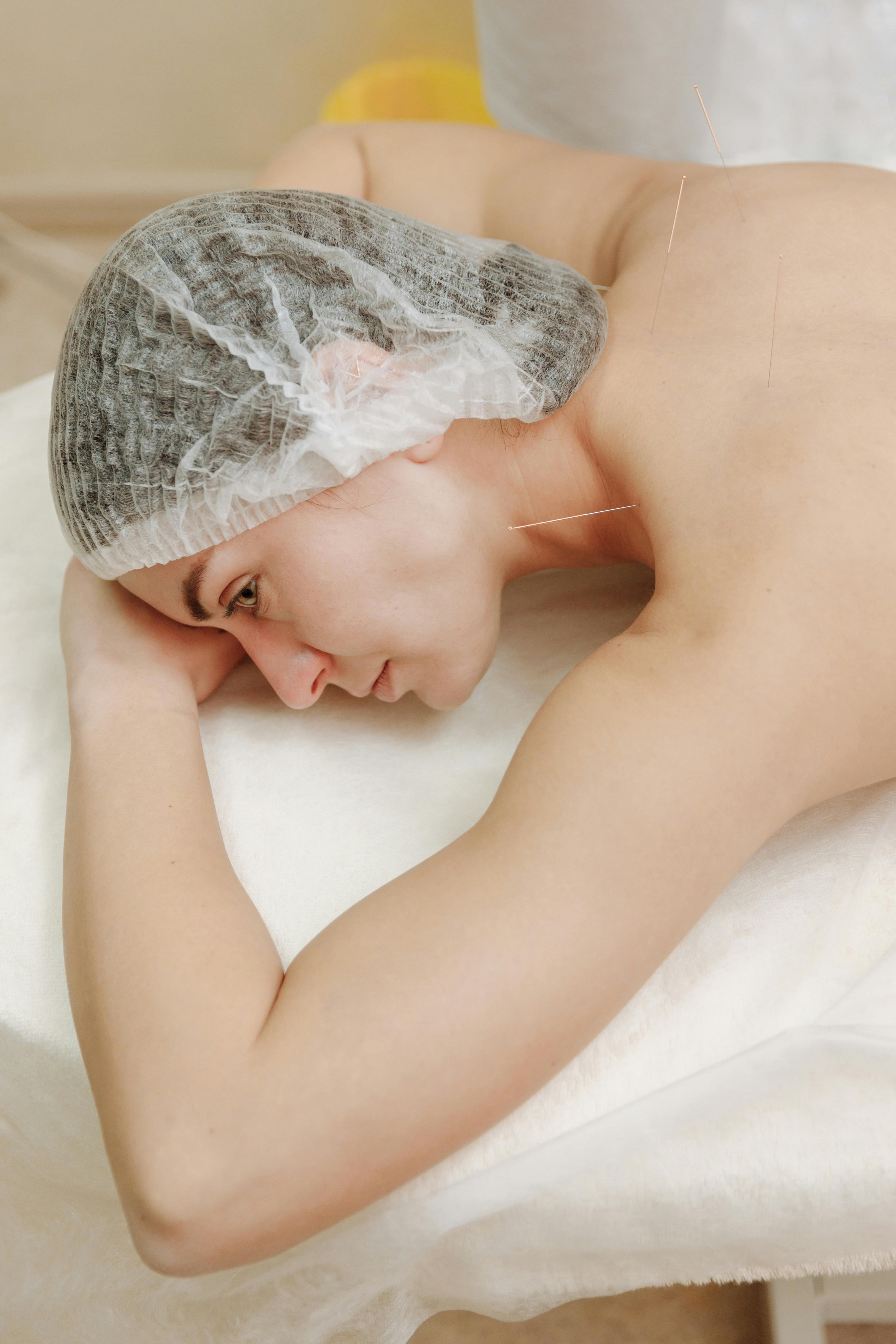
Hormonal health affects virtually every aspect of a woman's wellbeing — sleep, mood, energy, metabolism, and fertility. Yet conventional medicine's toolkit for hormonal conditions is limited: hormone replacement therapy (HRT) carries risks that make many women uncomfortable; birth control pills manage symptoms without addressing root causes; and conditions like PCOS have no definitive pharmacological cure.
Traditional Chinese Medicine offers a fundamentally different framework. Rather than targeting isolated hormone levels, TCM assesses the whole body's functional balance and uses acupuncture, herbal formulas, and lifestyle guidance to restore systemic equilibrium. Clinical research now supports this approach: a 2019 RCT published in Menopause found that acupuncture reduced hot flash frequency by 36% after 8 weeks, and multiple trials show that TCM interventions improve menstrual regularity and androgen levels in PCOS. For many women, the result is symptom relief that persists well beyond the treatment period — without the side effects of long-term medication.
TCM for Menopause: Managing Hot Flashes, Night Sweats & Mood Changes
Menopause affects all women, but the severity of symptoms varies enormously. Approximately 75% of women experience hot flashes, 60% report sleep disturbances, and nearly half experience mood changes including anxiety and depression. For women who cannot or prefer not to use HRT, TCM has emerged as one of the most researched non-hormonal alternatives.
What Does the Research Say?
The evidence base for acupuncture in menopause has strengthened considerably over the past decade.
A landmark 2019 randomized controlled trial published in the journal Menopause (Lund et al., 2019) enrolled 70 postmenopausal women and found that a 5-week course of acupuncture reduced hot flash frequency by 36%, compared to a sham control group. Improvements in sleep, emotional well-being, and skin and hair problems were also observed. Crucially, the benefits persisted at 6-month follow-up.
A larger 2020 meta-analysis in JAMA Internal Medicine pooled data from 12 randomized trials (763 participants) and concluded that acupuncture produced statistically significant reductions in hot flash frequency and severity, with an effect size comparable to low-dose HRT in moderate symptom cases.
Chinese herbal medicine adds another layer. Formulas such as Zhi Bai Di Huang Wan (知柏地黄丸) and Er Xian Tang (二仙汤) are specifically designed for menopause-related patterns — the former targeting yin deficiency with heat, the latter addressing kidney yang deficiency — and have been validated in multiple Chinese clinical trials.
Acupuncture for Menopause: Key Mechanisms
How does acupuncture influence hormonal symptoms? Research points to several pathways:
- Beta-endorphin modulation: Acupuncture stimulates the release of beta-endorphins in the hypothalamus, which helps regulate the temperature control center and reduce hot flash frequency
- Serotonin and GABA activity: Needling specific points increases serotonin levels, which improves sleep quality and reduces anxiety
- HPA axis regulation: Acupuncture modulates the hypothalamic-pituitary-adrenal axis, reducing the exaggerated stress response that amplifies menopausal symptoms
Key acupuncture points for menopause include Sanyinjiao (SP6), Taixi (KD3), Guanyuan (CV4), and Baihui (GV20) — points traditionally associated with kidney-yin nourishment and spirit calming.
Menopause Symptom Response by TCM Treatment
| Symptom | TCM Approach | Evidence Level | Expected Response |
|---|---|---|---|
| Hot flashes | Acupuncture + Zhi Bai Di Huang Wan | Strong (multiple RCTs) | 30–50% reduction |
| Night sweats | Acupuncture + herbal formula | Moderate | Significant improvement |
| Insomnia | Acupuncture + Suan Zao Ren Tang | Strong | Improved sleep onset and quality |
| Anxiety / mood | Acupuncture + Gan Mai Da Zao Tang | Moderate | Meaningful reduction |
| Vaginal dryness | Topical herbs + systemic formula | Emerging | Partial improvement |
| Joint pain | Acupuncture + tuina | Strong | Significant pain reduction |
TCM for PCOS: Regulating Hormones and Restoring Cycles
Polycystic ovary syndrome (PCOS) is the most common endocrine disorder in reproductive-age women, affecting an estimated 8–13% globally. Its hallmarks — irregular periods, elevated androgens, and polycystic ovaries — create a cascade of downstream effects including infertility, metabolic dysfunction, and psychological distress.
Western medicine typically manages PCOS with hormonal contraceptives (to regulate cycles), metformin (for insulin resistance), and fertility drugs (for those trying to conceive). None of these address underlying pathophysiology.
How TCM Views PCOS
TCM does not have a single condition called "PCOS" — instead, practitioners pattern-differentiate based on a woman's full symptom picture. PCOS most commonly maps to two or three TCM patterns:
- Kidney yang deficiency + phlegm-dampness obstruction (肾阳虚夹痰湿): The most common type. Associated with overweight, fatigue, cold extremities, heavy or absent periods, and cysts in the ovaries reflecting accumulation of dampness and stagnation
- Liver qi stagnation + blood stasis (肝气郁结兼血瘀): More common in lean PCOS. Associated with irritability, painful irregular periods, PMS, and elevated androgens from liver qi constraint
- Kidney yin deficiency + empty heat (肾阴虚虚热): Less common; presents with night sweats, insomnia, and elevated LH/FSH ratios
This differentiation drives individualized treatment rather than a one-size-fits-all protocol.
Acupuncture and PCOS: Clinical Evidence
The most rigorous clinical work on acupuncture and PCOS comes from a team at the University of Gothenburg. A 2017 randomized controlled trial led by Professor Elisabet Stener-Victorin (Stener-Victorin et al., 2017) compared low-frequency electro-acupuncture to physical exercise in 84 women with PCOS. After 16 weeks, acupuncture produced significantly greater improvements in:
- Menstrual frequency (cycles increased from mean 3.2 to 8.1 per year)
- Testosterone levels (reduced by ~25%)
- Antral follicle count normalization
- Sympathetic nerve activity (a key driver of androgen excess)
A 2018 Cochrane-protocol systematic review of acupuncture for PCOS confirmed that available evidence shows acupuncture can improve reproductive outcomes when used alongside standard care, though larger trials are needed.
Herbal Protocols for PCOS
Classical TCM formulas commonly used in PCOS management include:
| Formula | Chinese Name | Indication | Key Actions |
|---|---|---|---|
| Wen Jing Tang | 温经汤 | Phlegm-damp with cold | Warms uterus, resolves phlegm, regulates cycle |
| Gui Zhi Fu Ling Wan | 桂枝茯苓丸 | Blood stasis with cysts | Moves blood, reduces cystic masses |
| Cang Fu Dao Tan Wan | 苍附导痰丸 | Phlegm-damp obstruction | Resolves phlegm, opens pathways |
| Xiao Yao San | 逍遥散 | Liver qi stagnation | Smooths liver qi, regulates cycle |
These formulas are always individualized by a TCM physician and adjusted over time as the patient's pattern shifts.
TCM for Other Women's Health Conditions
TCM's scope in women's health extends well beyond menopause and PCOS:
| Condition | TCM Approach | Evidence | Key Benefit |
|---|---|---|---|
| Dysmenorrhea (painful periods) | Acupuncture + herbal formula | Strong (Cochrane 2016) | Reduces pain intensity comparable to NSAIDs, without side effects |
| Premenstrual syndrome (PMS) | Acupuncture + liver-smoothing herbs | Moderate | Reduces emotional and physical symptoms |
| Endometriosis | Acupuncture + blood-moving formulas | Emerging | Reduces pain; may slow progression |
| Infertility (unexplained) | Acupuncture + TCM constitution treatment | Moderate | Improves uterine blood flow; used adjunctively with IVF |
| Recurrent miscarriage | Herbal medicine + acupuncture | Emerging | Addresses underlying deficiency patterns |
| Perimenopause transition | Full TCM program | Strong | Smooths transition, prevents symptom escalation |
For dysmenorrhea specifically, a 2016 Cochrane Review (Smith et al., 2016) pooling 42 trials found acupuncture and herbal medicine both superior to no treatment and comparable to pharmaceutical pain management.
Acupuncture vs. Hormone Replacement Therapy (HRT): What's the Difference?
Many women considering TCM for menopause are weighing it against HRT. Here's an honest comparison:
| Factor | Acupuncture + TCM | Hormone Replacement Therapy |
|---|---|---|
| Mechanism | Neuroendocrine modulation, qi-blood balance | Directly replaces estrogen/progesterone |
| Effectiveness for hot flashes | 30–50% reduction (evidence-based) | 75–90% reduction (most effective) |
| Side effects | Minimal (mild bruising, rare) | Breast tenderness, bloating; increased breast cancer risk with long-term use |
| Who it suits | Women with mild–moderate symptoms; those who cannot use HRT | Women with severe symptoms; early surgical menopause |
| Duration of benefit | Persists after treatment ends (months to years) | Symptoms return when HRT stops |
| Bone health | Limited evidence | Protects bone density |
| Cost (Shanghai program) | $800–1,800 for a full course | Varies by country |
| Availability in China | Widely available at TCM hospitals | Available but less commonly used |
Clinical guidance: TCM and HRT are not mutually exclusive. Many integrative oncologists and gynecologists recommend TCM as a primary approach for mild–moderate menopause symptoms, and as an adjunct to low-dose HRT for severe cases.
What a Women's Health TCM Program Looks Like in Shanghai
Shanghai's top TCM hospitals — including Shanghai Hospital of Traditional Chinese Medicine (上海市中医医院) and the TCM gynecology department at Longhua Hospital (龙华医院) — operate specialized women's health clinics staffed by senior TCM gynecologists with 20+ years of clinical experience.
A typical women's health program proceeds through three phases:
Phase 1 — Assessment (Week 1)
- Comprehensive TCM diagnosis: pulse assessment (28 pulse qualities), tongue examination, detailed symptom interview
- Hormone panel review (if available)
- Individualized pattern diagnosis and treatment plan
Phase 2 — Active Treatment (Weeks 2–8)
- Acupuncture: 2 sessions per week, 45–60 minutes per session
- Custom herbal formula: granules or decoction, adjusted every 2 weeks
- Dietary and lifestyle guidance specific to your TCM pattern
- Possible additional modalities: moxibustion, ear acupuncture, tuina
Phase 3 — Consolidation (Months 3–6)
- Monthly acupuncture maintenance
- Herbal patent medicine (easier to take long-term than decoctions)
- Reassessment and formula adjustment as patterns shift
International patients at OriEast partner hospitals receive English-language consultation support, translated medical records, and coordination with gynecologists from their home country.
Frequently Asked Questions
Q: How quickly does acupuncture work for menopause symptoms? Most women notice meaningful reduction in hot flash frequency and sleep improvement within 3–4 weeks of weekly acupuncture. The 2019 Menopause RCT showed significant effects at week 8, with continued improvement at 6-month follow-up. Herbal medicine typically takes slightly longer — 4–8 weeks for full effect — but provides deeper constitutional treatment.
Q: Can TCM cure PCOS? "Cure" is not the right framework — PCOS is a lifelong tendency, not a reversible disease. What TCM can do is significantly improve the symptoms and downstream consequences: restoring regular cycles, reducing androgen levels, improving insulin sensitivity, and in many cases supporting natural conception. Women who complete a full TCM program often maintain improved cycle regularity for extended periods after stopping treatment.
Q: Is TCM safe to use alongside birth control pills or other medications? For most women, yes — but herb-drug interactions exist and must be assessed by a qualified TCM physician. Certain Chinese herbs can interact with blood thinners, antidepressants, and some reproductive hormones. Always disclose all medications to your TCM practitioner before starting herbal treatment. Acupuncture has no known interactions with medications.
Q: How is TCM treatment in China different from what I'd get at home? In China, TCM is practiced within a fully integrated medical system. Shanghai's top TCM hospitals have dedicated gynecology departments where physicians complete 5-year medical degrees in TCM plus 3+ years of specialty training. They work alongside conventional gynecologists, can order ultrasound and hormone testing, and prescribe pharmaceutical-grade herbal granules. This depth of integration is difficult to replicate in countries where TCM is practiced as an alternative rather than mainstream medicine.
Q: Does acupuncture help with PCOS-related infertility? Acupuncture is most commonly used as an adjunct to IVF or other fertility treatments for PCOS patients. Studies show improvements in ovarian blood flow, endometrial thickness, and stress hormone levels that may improve IVF outcomes. Some women with PCOS who have irregular cycles also achieve natural conception after a course of TCM treatment that restores ovulation. For more detail, see our article on acupuncture and IVF support.
Q: What does a women's health TCM consultation cost in Shanghai? Initial consultations at public TCM hospitals in Shanghai typically cost $50–100 USD for international patients. Acupuncture sessions run $40–80 per session. Full herbal formulas cost approximately $15–40 per week depending on complexity. A comprehensive 8-week program (including consultation, 16 acupuncture sessions, and herbal medicine) typically ranges from $1,200–2,500 — significantly less than comparable integrative medicine programs in the US or Europe. Learn more about medical tourism in China.