When we think of the Silk Road, we picture camel caravans carrying silk, spices, and precious metals across the vast landscapes of Central Asia. But alongside these tangible goods traveled something equally valuable and far more enduring: medical knowledge.
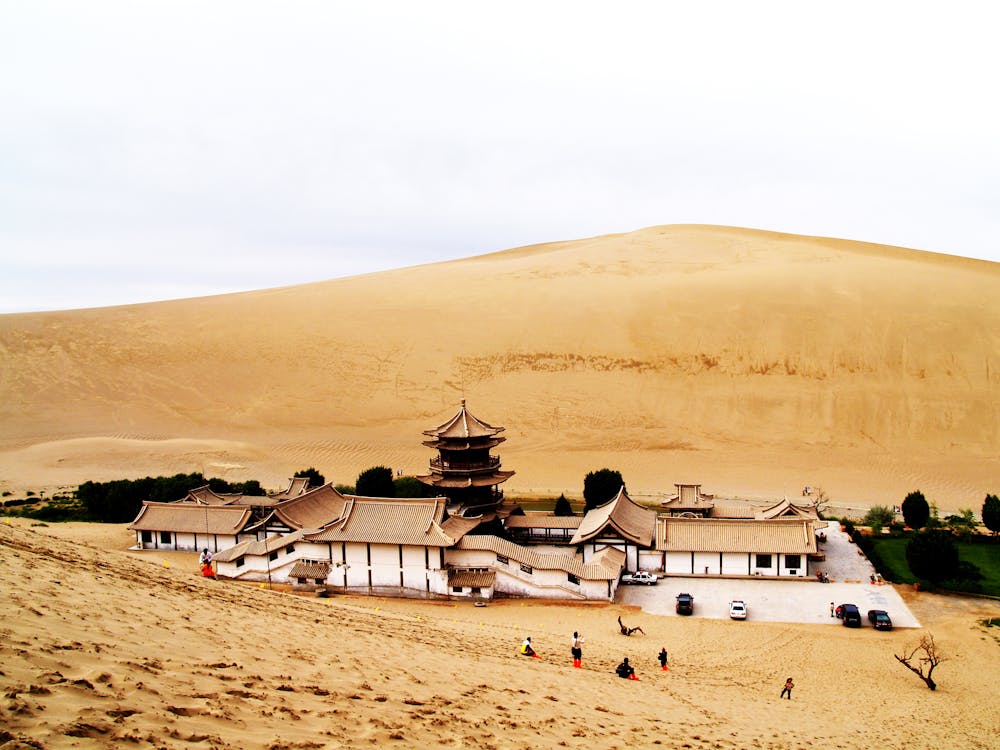
The ancient city of Dunhuang — a dusty oasis town at the edge of the Gobi Desert in China's Gansu province — sat at one of the most strategic crossroads of the Silk Road. For over a thousand years, it was a place where Chinese, Indian, Persian, Tibetan, and Central Asian medical traditions met, merged, and evolved. The medical manuscripts sealed inside its famous Mogao Caves represent one of the most important archives of healing knowledge in human history.
This is the story of how the Silk Road became the world's first medical knowledge highway — and why its legacy still shapes healthcare today.
Dunhuang: The Crossroads of Civilizations
Dunhuang was never a large city by ancient standards, but its geographic position made it extraordinarily important. Located where the Silk Road split into northern and southern routes around the Taklamakan Desert, every trader, monk, diplomat, and physician traveling between China and the West passed through Dunhuang.
This constant flow of people from different civilizations created a unique environment for knowledge exchange. Buddhist monks from India brought Ayurvedic medical concepts. Persian traders carried pharmacological knowledge from the Islamic world. Tibetan healers shared their understanding of high-altitude medicine. And Chinese physicians contributed their evolving systems of acupuncture, herbal medicine, and pulse diagnosis.
The result was not simply a collection of different medical traditions existing side by side. It was an active process of integration, experimentation, and documentation that produced medical knowledge more sophisticated than any single tradition could have achieved alone.
The Mogao Caves: A Medical Time Capsule
The Mogao Caves — a network of 492 temples carved into sandstone cliffs near Dunhuang — are a UNESCO World Heritage Site known for their extraordinary Buddhist art. But when a Taoist monk named Wang Yuanlu accidentally discovered a sealed chamber in 1900, the world gained access to something equally remarkable: a library of approximately 50,000 manuscripts and printed documents dating from the 4th to the 11th century.
Among the religious texts, literary works, and administrative records were hundreds of medical manuscripts that provide an unparalleled window into how medicine was practiced along the Silk Road more than a millennium ago.
What the Medical Manuscripts Reveal
The Dunhuang medical manuscripts include:
-
Acupuncture charts and point-location guides — These are among the earliest surviving visual maps of the acupuncture meridian system, showing that the practice was already systematically organized by the Tang Dynasty (618-907 CE).
-
Herbal formulas and materia medica — Hundreds of prescriptions for treating specific conditions, many of which remain in clinical use today. Some formulas combine Chinese herbs with ingredients imported along the Silk Road, including frankincense from Arabia and turmeric from India.
-
Moxibustion treatment protocols — Detailed guides for using heated mugwort (Artemisia vulgaris) to stimulate healing, a technique that remains central to modern TCM practice.
-
Diagnostic methods — Texts describing pulse diagnosis, tongue examination, and symptom pattern recognition — the same foundational diagnostic approaches used by TCM practitioners today.
-
Surgical and trauma care — Descriptions of wound treatment, bone setting, and emergency care techniques that reflect both Chinese and Central Asian medical influences.
-
Preventive health and dietary therapy — Manuscripts on food as medicine, seasonal health practices, and longevity cultivation — concepts that align with what modern medicine now calls preventive care and nutritional therapy.
These documents prove that Traditional Chinese Medicine was not a folk practice or superstition. It was a structured, evidence-based (for its era) medical system that systematically recorded observations, refined treatments, and integrated knowledge from multiple cultural sources.
The Silk Road Medical Exchange: What Traveled Where
The medical knowledge exchange along the Silk Road was genuinely bidirectional. Understanding what moved in each direction reveals the interconnected origins of medical traditions that are often treated as separate.
From China Westward
-
Acupuncture and moxibustion — Chinese needling techniques spread to Korea, Japan, Vietnam, and eventually to Central Asia and Persia. Japanese acupuncture (鍼灸) developed its own distinct characteristics but traces directly to Chinese origins.
-
Pulse diagnosis — The Chinese system of reading the pulse at the radial artery to diagnose internal organ conditions influenced Persian and Arabic medical traditions. The great Persian physician Ibn Sina (Avicenna) described pulse diagnosis methods in his Canon of Medicine that show clear Chinese influence.
-
Herbal pharmacology — Chinese materia medica, including ginseng, rhubarb, and cinnamon, traveled westward and were adopted into Persian and eventually European pharmaceutical traditions.
From the West and South to China
-
Indian Ayurvedic concepts — Buddhist monks carried Indian medical knowledge into China, including concepts of surgical intervention, eye medicine, and the use of specific medicinal plants. The integration of Indian and Chinese medical ideas is directly documented in Dunhuang manuscripts.
-
Persian and Arabic pharmacology — Aromatic resins (frankincense, myrrh), mineral medicines, and distillation techniques from the Islamic world entered Chinese medical practice through Silk Road trade.
-
Greco-Roman medical theory — Some scholars argue that elements of Hippocratic medicine — particularly ideas about the balance of bodily humors — may have influenced Chinese concepts of yin-yang balance through indirect transmission along the Silk Road, though this connection remains debated.
Why This History Matters for Modern Medicine
The Silk Road medical exchange is not merely an interesting historical footnote. It has direct relevance to how we think about healthcare today.
1. Integration Is Not New
The current trend toward "integrative medicine" — combining conventional Western treatments with acupuncture, herbal medicine, and other traditional therapies — is often presented as a modern innovation. In reality, medical integration has been happening for over a thousand years. The Dunhuang manuscripts show that ancient physicians were already combining techniques from different traditions based on what worked best for the patient.
Today, leading hospitals in China practice this same integrative approach. Patients receiving cancer treatment may combine chemotherapy with herbal medicine to reduce side effects. Those recovering from stroke use acupuncture alongside physical therapy. This is not alternative medicine — it is the continuation of a millennium-old tradition of evidence-based integration.
2. Ancient Formulas, Modern Validation
Many herbal formulas documented in the Dunhuang manuscripts have been validated by modern pharmacological research. For example:
-
Ma Huang (Ephedra) — Used for respiratory conditions in Dunhuang-era prescriptions, it was later found to contain ephedrine, now a key component in modern decongestant and asthma medications.
-
Qing Hao (Sweet Wormwood) — Referenced in ancient Chinese medical texts for treating fevers. In 2015, Chinese researcher Tu Youyou received the Nobel Prize in Medicine for isolating artemisinin from this plant — now the world's most effective malaria treatment.
-
Huang Qin (Scutellaria baicalensis) — Used in Silk Road-era formulas for inflammation and infection. Modern research has identified potent anti-inflammatory and antiviral compounds in this herb, and clinical trials for cancer adjunct therapy are underway.
3. The Unbroken Chain
What makes Chinese medicine unique is its unbroken chain of clinical documentation stretching back over two millennia. The Dunhuang manuscripts are one critical link in this chain, connecting the earliest medical texts (Huangdi Neijing, ~2nd century BCE) with the systematic pharmacopeias of the Song and Ming Dynasties and the hospital-based TCM practiced in China today.
When a patient receives acupuncture treatment in Shanghai today, the practitioner is working within a tradition that has been continuously refined, tested, and documented for over 2,500 years — a depth of clinical experience that no other medical system in the world can match.
Experiencing the Living Tradition
While Dunhuang itself is primarily a cultural heritage destination, the medical traditions it helped preserve and transmit are alive and accessible throughout modern China. Shanghai, in particular, offers international patients the opportunity to experience authentic TCM from practitioners trained at China's top medical universities.
At OriEast, we connect patients from around the world with experienced TCM practitioners and modern hospital facilities where the ancient and the modern work together — just as they did on the Silk Road over a thousand years ago.
Whether you are seeking treatment for a specific health condition or exploring TCM as part of a broader approach to wellness, understanding the deep historical roots of these practices can help you appreciate that you are not trying something "alternative." You are accessing one of the world's oldest, most documented, and most continuously refined medical traditions.
Interested in experiencing traditional Chinese medicine at its source? Contact OriEast for a free consultation about TCM treatment options in Shanghai.