← Back to Blog
Traditional Chinese Medicine

Acupuncture for Back Pain: Evidence, Benefits, and What to Expect

OriEast Editorial Team2026-03-27
Acupuncture for Back Pain: Evidence, Benefits, and What to Expect

Back pain is the single leading cause of disability worldwide. According to the Global Burden of Disease study, lower back pain alone affects 619 million people globally, and that number is projected to reach 843 million by 2050. In the United States, back pain accounts for more than 264 million lost work days annually — that's two full days for every working adult in the country.

If you're reading this, you've likely tried at least one conventional approach — painkillers, physical therapy, steroid injections, maybe even surgery — with limited or temporary results. You're not alone. Research consistently shows that for chronic back pain, conventional treatments often fail to deliver lasting relief.

This is where acupuncture enters the conversation. Once dismissed as pseudoscience in the West, acupuncture has earned recognition from the American College of Physicians (ACP), the World Health Organization (WHO), and the National Institutes of Health (NIH) as an evidence-based treatment for back pain. In fact, the ACP now recommends acupuncture as a first-line treatment for chronic low back pain — before medication.

This guide explains exactly how acupuncture treats back pain, what the clinical evidence says, what happens during treatment, and how you can access world-class acupuncture care at its source in China.


How Acupuncture Treats Back Pain: The Science

Acupuncture works through multiple physiological mechanisms that directly address the causes of back pain — not just the symptoms.

Pain Signal Modulation

When acupuncture needles are inserted into specific points near the spine and along meridians associated with back pain, they activate A-delta and C nerve fibers. These signals travel to the spinal cord's dorsal horn, where they trigger the release of endorphins and enkephalins — the body's most powerful natural painkillers. This mechanism, known as the gate control theory of pain, effectively "closes the gate" on pain signals traveling to the brain.

Functional MRI studies have demonstrated that acupuncture modulates activity in the brain's pain matrix, including the anterior cingulate cortex, insula, and thalamus — the same regions targeted by opioid medications, but without the addiction risk (Huang et al., 2012, Brain Research).

Anti-Inflammatory Response

Chronic back pain is frequently driven by persistent low-grade inflammation in spinal structures — discs, facet joints, and surrounding soft tissues. Research published in Nature Medicine has shown that acupuncture activates a vagal-adrenal anti-inflammatory pathway, reducing levels of pro-inflammatory cytokines including TNF-alpha, IL-1beta, and IL-6 (Liu et al., 2021). This provides a mechanistic explanation for why acupuncture can reduce inflammation without the gastrointestinal and cardiovascular risks of long-term NSAID use.

Muscle Relaxation and Blood Flow

Needle insertion and manipulation cause local vasodilation, increasing blood flow to chronically tense or ischemic back muscles. Electromyography (EMG) studies have shown that acupuncture reduces muscle spasm activity in the paraspinal muscles — the muscles that run alongside the spine and are most commonly involved in back pain. This improved circulation delivers oxygen and nutrients to damaged tissues while removing inflammatory metabolites.

Connective Tissue Remodeling

When acupuncture needles are rotated, they create a mechanical "winding" effect in the connective tissue (fascia). Research by Dr. Helene Langevin at Harvard Medical School has shown that this mechanical signal spreads through the fascial network, stimulating fibroblast activity and promoting tissue repair — particularly relevant for conditions involving fascial adhesions and myofascial trigger points (Langevin et al., 2006, Journal of Bodywork and Movement Therapies).

Neuroplastic Changes

Perhaps most importantly for chronic back pain, acupuncture has been shown to reverse maladaptive neuroplastic changes in the brain. Chronic pain literally rewires the brain, leading to central sensitization — a state where the nervous system amplifies pain signals even after the original injury has healed. Acupuncture helps "reset" these altered neural pathways, which is why its effects often persist long after treatment ends.


What Does the Clinical Evidence Say?

The evidence base for acupuncture in treating back pain is now substantial. Here are the landmark findings.

The ACP Guideline: Acupuncture as First-Line Treatment

In 2017, the American College of Physicians published a landmark clinical practice guideline in the Annals of Internal Medicine, recommending acupuncture as one of several first-line non-pharmacological therapies for chronic low back pain — before resorting to medication (Qaseem et al., 2017). This was a watershed moment: the largest organization of internal medicine physicians in the US formally placed acupuncture ahead of drugs in their treatment hierarchy.

The Vickers Meta-Analysis: 20,000+ Patients

The most cited acupuncture study in history is the individual patient data meta-analysis by Andrew Vickers and colleagues, originally published in 2012 and updated in 2018. Pooling data from 39 randomized controlled trials involving over 20,000 patients, it concluded:

  • Acupuncture is significantly more effective than sham acupuncture and no-acupuncture controls for chronic back pain
  • The effect size is clinically meaningful — not just statistically significant
  • Approximately 85% of the pain-relief benefit persists at 12 months after treatment ends
  • The effects are not attributable to placebo

(Vickers et al., 2018, Journal of Pain)

The German Mega-Trials

Germany conducted the largest acupuncture trials in history — the GERAC and ART trials — involving over 14,000 patients with chronic low back pain. The results were striking:

  • Acupuncture was nearly twice as effective as conventional therapy (guideline-based care including physical therapy, exercise, and NSAIDs)
  • 47.6% of acupuncture patients showed clinically significant improvement vs. 27.4% in the conventional therapy group
  • Benefits persisted at 6-month follow-up

These trials were so influential that German health insurance began covering acupuncture for chronic low back pain in 2007 — and continues to do so today (Haake et al., 2007, Archives of Internal Medicine).

Cochrane Review Findings

A Cochrane systematic review specifically evaluating acupuncture for non-specific low back pain concluded that acupuncture provides short-term improvements in pain and function compared to no treatment, and that adding acupuncture to other treatments improves outcomes (Furlan et al., 2005, updated analyses continue to support these findings).


Which Types of Back Pain Respond Best to Acupuncture?

Not all back pain is the same, and acupuncture's effectiveness varies by condition. Here's an evidence-based breakdown.

Strong Evidence (Grade A)

ConditionEvidence SummaryExpected Outcome
Chronic non-specific low back painACP first-line recommendation; multiple large RCTs50-70% pain reduction; effects persist 6-12 months
Chronic neck pain (cervicalgia)Cochrane-reviewed; German mega-trialsSignificant pain and function improvement
Myofascial back painTrigger point acupuncture well-studiedRapid muscle tension release; improved range of motion

Moderate Evidence (Grade B)

ConditionEvidence SummaryExpected Outcome
Sciatica (lumbar radiculopathy)Electroacupuncture shows clear short-term benefitPain reduction; improved nerve function
Lumbar spinal stenosisGrowing body of RCTs from China and KoreaReduced pain; improved walking tolerance
Failed back surgery syndromeAcupuncture as adjunct to rehabilitationReduced post-surgical pain and medication use

Preliminary Evidence (Grade C)

ConditionEvidence SummaryExpected Outcome
Acute back pain / muscle strainLimited RCTs but strong clinical experienceFaster recovery; reduced medication need
Degenerative disc diseaseCase series and small RCTsPain management; slowed progression
Ankylosing spondylitisAdjunct to medical therapyReduced stiffness and pain scores

When Acupuncture May Not Be Enough

Acupuncture is not a replacement for surgery when there are clear surgical indications — such as cauda equina syndrome, progressive neurological deficit, or spinal instability. In these cases, acupuncture can still play a valuable role in pre-surgical preparation and post-surgical recovery.


How TCM Diagnoses Back Pain Differently

One of acupuncture's key advantages is the precision of Traditional Chinese Medicine diagnosis. Where Western medicine might label your condition simply as "non-specific low back pain," TCM differentiates between distinct patterns that require different treatment approaches.

TCM PatternSymptomsCommon inTreatment Focus
Qi stagnation & blood stasisSharp, fixed, stabbing pain; worse with pressure; pain after injury or prolonged sittingOffice workers, post-injury patientsMove qi and blood; resolve stasis
Cold-damp obstructionHeavy, cold, aching pain; worse in cold/rainy weather; stiffness in morningElderly patients, cold climate residentsWarm channels; expel cold-damp
Kidney deficiencyDull, chronic ache; weakness in knees; worse with fatigue or overworkAging patients, overworked professionalsTonify kidney; strengthen lumbar region
Damp-heat accumulationBurning pain with local heat; worse in humid weatherAcute inflammation, active disc herniationClear heat; resolve dampness
Liver qi stagnationPain linked to emotional stress; radiating pain; muscle tensionHigh-stress professionalsSoothe liver; regulate qi flow

This differentiation matters because it directly determines which acupoints are selected, what needling technique is used, and whether adjunct therapies like moxibustion (for cold patterns) or cupping (for stasis patterns) are added. Two patients with identical MRI findings might receive quite different acupuncture prescriptions — and both achieve better outcomes than a one-size-fits-all approach.

For a deeper understanding of TCM pain classification, see our Complete Guide to TCM for Chronic Pain.


What to Expect During Acupuncture Treatment for Back Pain

Initial Assessment

Your first visit includes a comprehensive evaluation that goes beyond simply locating the pain:

  • Medical history review — including imaging results (MRI, X-ray), previous treatments, and medication history
  • TCM four examinations — observation (complexion, posture), listening (voice, breathing), inquiry (detailed symptom history), and palpation (pulse diagnosis, tender point examination)
  • Physical assessment — range of motion testing, neurological screening, specific orthopedic tests
  • Diagnosis and treatment plan — combining Western and TCM diagnoses to create a personalized protocol

The Acupuncture Session

A typical back pain acupuncture session involves:

  1. Positioning — You'll lie face down (for lower back pain) or in a comfortable position that exposes the treatment area. Hospital treatment rooms in China are clean, professional, and temperature-controlled.

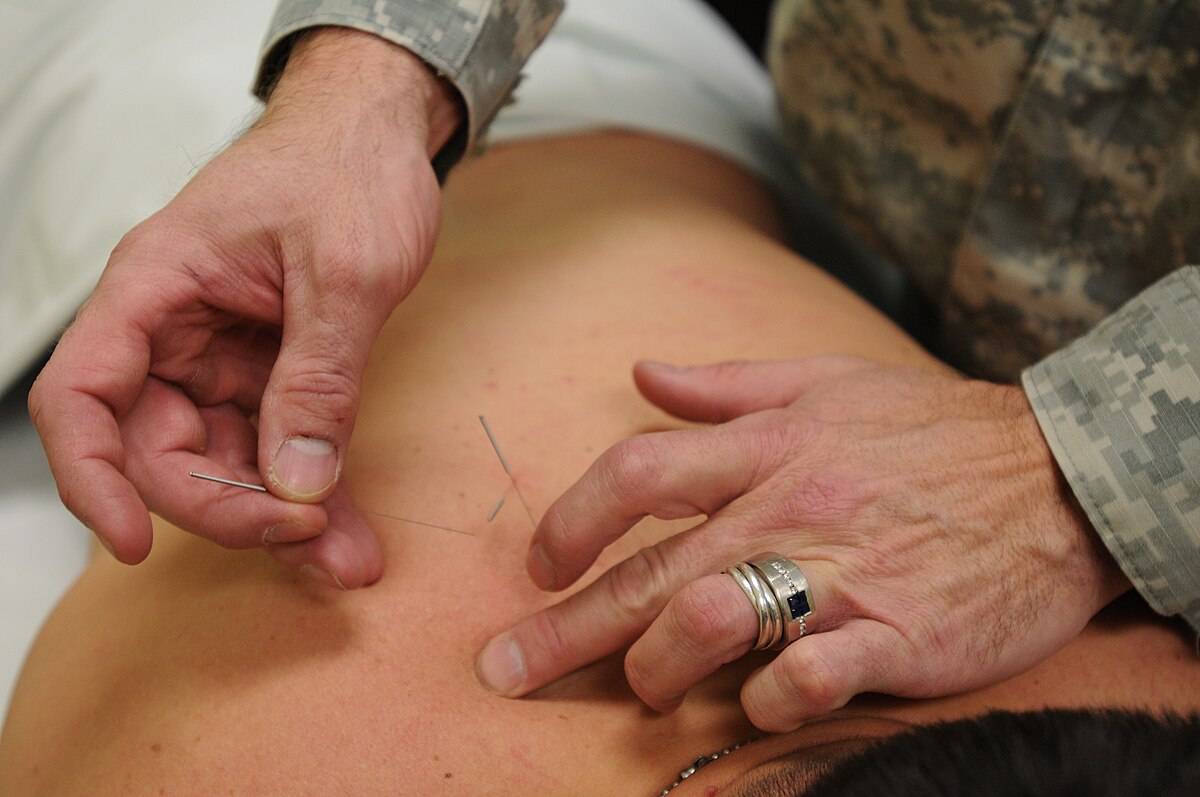
  2. Needle insertion — Ultra-fine, sterile, single-use needles (0.25-0.30mm diameter — thinner than a human hair) are inserted into selected acupoints. For back pain, common points include:

    • Shenshu (BL23) — kidney shu point, fundamental for lumbar pain
    • Weizhong (BL40) — "commanding point of the back," used in virtually all back pain protocols
    • Yaoyangguan (GV3) — governor vessel point at L4-L5, targeting the most common site of disc problems
    • Huantiao (GB30) — critical for sciatica and hip-radiating pain
    • Ashi points — tender or trigger points specific to your pain pattern
    • Distal points on the hands, feet, and legs that activate meridians connected to the back
  3. Needle sensation — You may feel a brief pinch during insertion, followed by a sensation of heaviness, warmth, tingling, or mild aching known as "de qi" — this indicates the needle has engaged the therapeutic point and is a positive sign.

  4. Retention and stimulation — Needles remain in place for 20-30 minutes. During this time, the practitioner may:

    • Apply electroacupuncture (mild electrical current between needles) — particularly effective for sciatica and severe pain
    • Perform manual needle stimulation at intervals
    • Add warm needle moxibustion for cold-pattern back pain
  5. Adjunct therapies — Depending on your diagnosis, the session may include:

    • Cupping on the back to release muscle tension and fascial adhesions
    • Tuina (Chinese manual therapy) to address specific muscle groups
    • Gua sha for myofascial release
    • Herbal heat packs applied to the lumbar region

Treatment Frequency and Duration

In China, acupuncture for back pain follows an intensive protocol that differs significantly from Western practice:

AspectWestern PracticeChinese Hospital Practice
Frequency1-2 times per weekDaily (5-6 days per week)
Course lengthOpen-ended10 days per course
Total coursesVaries2-3 courses typical
Session duration30-45 minutes30-45 minutes + adjunct therapies

This intensive approach is one of the key reasons Chinese hospital acupuncture achieves faster and more sustained results. Therapeutic effects accumulate more effectively with daily treatment than with weekly sessions.

A typical treatment timeline for chronic back pain:

  • Week 1 — Pain intensity typically decreases 30-50%; improved sleep quality
  • Week 2 — Further pain reduction; increased range of motion; reduced medication
  • Week 3-4 — Consolidation phase; addressing remaining symptoms; functional improvement
  • Follow-up — Take-home strategies for maintenance and prevention
Acupuncture treatment for back pain at a modern Chinese hospital

Acupuncture vs Other Back Pain Treatments: How It Compares

TreatmentEffectiveness for Chronic Back PainRisks / Side EffectsCost (US)Long-Term Results
AcupunctureHigh (ACP Grade A recommendation)Minimal — rare bruising$75-200/session85% benefit persists at 12 months
NSAIDsModerate short-term reliefGI bleeding, kidney damage, cardiovascular risk$10-50/monthSymptoms return when stopped
OpioidsShort-term pain maskingAddiction, tolerance, cognitive effects$30-200/monthNo long-term benefit; worsens outcomes
Physical therapyModerateVery low risk$100-300/sessionGood if exercises maintained
Steroid injectionsModerate short-termTissue damage with repeated use, infection$500-2,000/injectionEffects fade in 3-6 months
Spinal surgeryVaries by conditionInfection, nerve damage, failed back syndrome$20,000-100,000+20-40% develop chronic post-surgical pain
Acupuncture + TCM (integrated)HighestMinimalSee belowMost sustained

The key insight: acupuncture is not just an alternative — for chronic back pain, it is the recommended first-line treatment by the ACP, ahead of medication. And when combined with other TCM modalities (herbal medicine, tuina, cupping), outcomes improve further.


Cost Comparison: Back Pain Treatment

For international patients, cost savings are a significant factor in choosing where to receive treatment.

TreatmentUS CostChina Cost (Top Hospital)Savings
Acupuncture (single session)$75-200$15-5070-85%
Acupuncture course (10 sessions)$750-2,000$150-50075-80%
Electroacupuncture add-on$50-100$10-2575-80%
Tuina (single session)$80-150$15-4075-80%
Cupping therapy$40-80$8-2075-80%
Comprehensive 4-week back pain program$5,000-10,000$1,000-2,50075-80%
MRI (lumbar spine)$1,000-3,000$150-40085-90%

A comprehensive 4-week back pain treatment program in Shanghai — including daily acupuncture, herbal medicine, tuina, and specialist consultations — typically costs $1,000-$2,500. The same level of care in the US would cost $5,000-$10,000 or more, even with insurance.

For detailed pricing and service packages, visit our TCM Treatment Services page or contact us for a personalized quote.


Getting Acupuncture for Back Pain in Shanghai

Shanghai is home to some of the world's leading acupuncture departments, housed within the city's top-tier hospitals. These are not small private clinics — they are full-scale medical departments with decades of clinical research experience and access to advanced diagnostic technology.

The Process

Step 1: Free Consultation Submit your medical records, imaging results, and pain history through OriEast. Our medical team evaluates your case and recommends the most appropriate hospital and specialist.

Book a Free Consultation →

Step 2: Treatment Planning You receive a detailed treatment plan with estimated duration, daily schedule, and cost breakdown. We handle hospital appointments, visa support (if needed), and accommodation arrangements. For visa information, see our Visa Guide.

Step 3: Arrival and Diagnosis An OriEast bilingual medical coordinator accompanies you to the hospital. Your initial visit includes comprehensive Western diagnostics (MRI if needed) combined with TCM assessment — ensuring nothing is missed.

Step 4: Daily Treatment Treatment typically runs 2-4 weeks. A typical daily schedule:

  • Morning: Acupuncture + electroacupuncture (30-45 minutes)
  • Afternoon: Tuina manual therapy (30 minutes) + cupping or moxibustion
  • Daily: Herbal medicine (if prescribed)
  • Regular: Specialist progress review and plan adjustment

Step 5: Discharge and Follow-Up You leave with take-home herbal prescriptions (convenient granule form), a personalized exercise program, self-acupressure instructions for maintenance, and a remote follow-up schedule with your Shanghai physician.


Self-Acupressure Points for Back Pain Relief

While professional acupuncture treatment delivers the best results, you can use these acupressure techniques at home for temporary relief between sessions or while planning your treatment trip.

Weizhong (BL40) — The "Back Pain Master Point"

  • Location: Center of the back of the knee crease
  • Technique: Press firmly with your thumb for 30-60 seconds while slowly flexing and extending the knee
  • Effect: Immediate relief for acute lower back pain and spasm

Shenshu (BL23) — Kidney Shu Point

  • Location: 1.5 cun (about two finger widths) lateral to the spinous process of L2
  • Technique: Use both thumbs to press simultaneously on both sides; hold for 1-2 minutes
  • Effect: Addresses chronic lumbar ache and kidney-deficiency pattern back pain

Houxi (SI3) — Small Intestine 3

  • Location: On the side of the hand, in the depression proximal to the 5th metacarpophalangeal joint
  • Technique: Press firmly for 30 seconds while gently rotating the lower back
  • Effect: Particularly effective for acute stiffness and inability to bend

Yaoyangguan (GV3) — Lumbar Yang Gate

  • Location: Below the spinous process of L4 (at belt level)
  • Technique: Warm the point with your palm for 2-3 minutes, then press firmly
  • Effect: Warms and opens the lumbar region; useful for cold-pattern back pain

Note: Acupressure provides temporary symptomatic relief and is not a substitute for professional acupuncture treatment. For chronic or severe back pain, consult a qualified practitioner.


Frequently Asked Questions

Does acupuncture really work for back pain?

Yes. The American College of Physicians recommends acupuncture as a first-line treatment for chronic low back pain, based on high-quality evidence from meta-analyses involving over 20,000 patients. Studies show acupuncture is significantly more effective than sham acupuncture and conventional care, with 85% of benefits persisting at 12 months.

How many acupuncture sessions do I need for back pain?

This depends on the severity and duration of your condition:

  • Acute back pain (less than 6 weeks): 5-10 sessions often sufficient
  • Subacute back pain (6-12 weeks): 10-15 sessions typical
  • Chronic back pain (3+ months): 20-30 sessions (2-3 treatment courses of 10 days each)

In China's intensive daily treatment model, results accumulate faster than with weekly sessions. Most patients experience meaningful improvement within the first week.

Is acupuncture painful?

Most patients describe the sensation as a mild, brief pinch during insertion, followed by a feeling of heaviness, warmth, or tingling (de qi). Many people find acupuncture deeply relaxing — it's common to fall asleep during treatment. The needles used are extremely fine (0.25mm — thinner than a human hair), making them far less painful than injections or blood draws.

Can acupuncture help with sciatica?

Yes. Electroacupuncture — where a mild electrical current is passed between acupuncture needles — has shown clear effectiveness for sciatic pain in multiple clinical trials. Key points like Huantiao (GB30) and Weizhong (BL40) are specifically indicated for sciatica, and treatment protocols for radicular pain are well-established in Chinese hospital acupuncture departments.

Is acupuncture safe for back pain?

Acupuncture has an excellent safety profile. A systematic review of over 1 million acupuncture treatments found that serious adverse events are extremely rare (fewer than 0.05 per 10,000 treatments). When performed by licensed practitioners using sterile single-use needles — as is standard in Chinese hospitals — the risk is minimal. The most common side effects are mild bruising or temporary soreness at needle sites.

Can I combine acupuncture with my current back pain treatment?

Absolutely. Acupuncture integrates well with physical therapy, exercise programs, and medication. In Chinese hospitals, integrative treatment — combining acupuncture with Western medicine diagnostics, herbal medicine, and manual therapy — is the standard approach. Many patients reduce their pain medication during acupuncture treatment, but any changes should be made under physician guidance.

Why should I come to China for acupuncture?

Three reasons: expertise (Chinese hospital acupuncturists complete 5-year medical degrees and treat back pain daily with protocols refined over decades), intensity (daily treatment courses produce faster results than weekly sessions), and cost (comprehensive treatment at a top Shanghai hospital costs 70-85% less than equivalent care in the US or Europe). For more on medical travel to China, see our Complete Guide to Medical Tourism in China.


Take the First Step Toward a Pain-Free Back

Back pain doesn't have to be your permanent companion. Acupuncture — supported by evidence from over 20,000 patients and recommended as first-line treatment by the American College of Physicians — offers a proven path to lasting relief.

In Shanghai, you can access the world's most experienced acupuncture practitioners, receive intensive daily treatment that accelerates recovery, and save 70-85% compared to Western costs. OriEast manages every detail — from consultation and hospital booking to bilingual coordination and follow-up care.

Book a Free Consultation →

Explore our TCM Treatment Services | Learn about Acupuncture in Shanghai | Browse Partner Hospitals


Medical Disclaimer: This article is for educational and informational purposes only and does not constitute medical advice, diagnosis, or treatment. Acupuncture should be administered by qualified, licensed practitioners. Always consult your physician before starting any new treatment, especially if you have underlying conditions or are taking medication. Individual results may vary. OriEast facilitates medical service connections but does not provide medical advice or guarantee treatment outcomes.

Next step

If this topic is relevant to your treatment or travel plan, these pages are the best next place to continue.